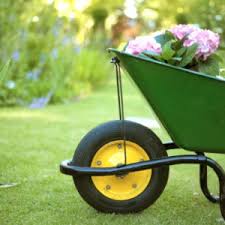
How pulling weeds made me think of bad habits
I don’t know about you but when I’m engaged in a mindless activity, like pulling weeds, my mind remains anything but neutral. I find these times are usually times of reflection.
Tuesday of this week was unseasonably hot in Michigan. I worked in my garden for a couple of hours in the morning. I stayed inside until about seven in the evening when I went outside to work in my own yard. I don’t do hot.

I have a couple of huge pine trees behind my deck. I use the pine needles for mulch in the garden. But the pine needles were full of tiny little tree sprouts, and I certainly didn’t want to transport them into my garden. Some of the tiny saplings were very easy to pull out, obviously because they hadn’t had time to take root. Some of them required a hard tug, while others I had to use both my hands and really give them a yank. I couldn’t spray them with even a safe weed killer, because it would contaminate my garden. So I did the only thing I could. I got down and hand-pulled every one of them. What a job! It wasn’t hard, just time-consuming.
But it got me thinking.

I couldn’t help but think how much this process was like bad habits. Some habits are fairly easy to break; others require a little more time. But then there are those habits that are really hard to change. Especially if we don’t see an immediate consequence, like sugar. I have a big sweet tooth, and while I could certainly afford to lose ten pounds, I never put on as much weight in comparison to the amount of sugar I ingest. The same applies to weight gain. On our way to going forty pounds, there were increments of five pounds, then ten pounds. How much easier to have lost that first five than the final forty. Right?
Weeds and habits: not much different.
I probably don’t eat as many sweets as I think I do, but I know I eat more than I should. I’m just lucky that I don’t put on weight easily. I come from parents, aunts, and uncles who were all slim. When my mother was young, she was put on a milkshake diet because the doctor wanted her to gain some weight. That would be my dream diet! And I have a real problem in the evening. I just have to have something sweet after dinner. My body (really, my mind) craves. It is a bad habit.
Even the most ingrained habit was nothing more than a little sapling at one point. We didn’t pull it up then because we had no idea it was going to take hold. Suddenly, it’s a tree that is rooted in our very being. No, it has to be pulled out by the trunks, roots, and all.
It’s easy to let things sneak up on us and what once was a tiny habit is something we now find hard to break.
That’s why I track these things in my Bullet Journal. It’s too easy to forget all we do in a day, like the cookie we had at lunch that we forgot when we have the second cookie after dinner. And I’m a real believer that we only change what we track because it’s the only valid way to know.
It’s like getting the minimum number of steps in each day. How do we know? We either track them on our phone, our watches or with paper and pencil. It’s never been easier to track our efforts in any area.
The actual word habit is only used once in the Bible in Hebrews 10:25,” not giving up meeting together, as some are in the habit of doing, but encouraging one another—and all the more as you see the Day approaching.” In other words, make going to church a habit.
Difference between routine and habits
I did some reading, and from what I gathered, there is not a whole lot of difference between routines and habits. However, there are nuances that set them apart. Routines can seamlessly evolve into habits over time, but it’s important to recognize that a habit is a type of routine because we habitually engage in it without much thought. For example, we don’t consciously think about a habit before we perform it; instead, routines are more deliberate and thought-out actions that we engage in regularly. Brushing our teeth is a classic example of a routine, but the specific way we apply the toothpaste—such as the amount we squeeze onto the toothbrush and the technique we use—is where our individual habits come into play.
Additionally, while we routinely eat breakfast every morning as a necessary start to our day, the particular ways we go about it—such as whether we prefer to have toast before eggs or the opposite—highlight our personal habits that have formed over time. These subtle distinctions between routines and habits shape our daily experiences and influence our actions.
Habits aren’t always actions we take; they can also be actions we don’t take. For example, the verse in Hebrews is about a habit some church members had fallen away from. So habits can be action or lack of action. In our spiritual life they are both important. For example, if we want to make Bible study a habit we may have to give up the habit of checking our texts or e-mails in the morning. It’s a choice between one thing or another.
So ultimately, habits and choices are closely related, intertwining in a way that shapes our daily lives and our long-term goals. But then choice is always the bottom rung of the ladder, isn’t it? Each decision we make, no matter how trivial it may seem, becomes a crucial building block in the structure of our personal growth. How high we go on the ladder depends on each step we take, as every small choice leads to either progress or stagnation. Ultimately this determines the trajectory of our lives and aspirations. We foster habits that become second nature over time and lead us toward greater achievements.
While the bible doesn’t use the word habit except for that one time, it still addresses them. Although the term “habit” may not be explicitly used in the Bible, the concept of habits and their impact on our lives is addressed throughout the scriptures. The Bible provides guidance on developing positive habits, avoiding harmful ones, and the importance of cultivating spiritual disciplines.
For example, the idea of regularly praying, meditating on scripture, showing love and kindness to others, and living a life of integrity are all emphasized in the Bible as habits that contribute to spiritual growth and a closer relationship with God. We are told to discipline ourselves in a number of places.. We can only discipline ourselves when we recognize our bad habits.
Conversely, the Bible also warns against indulging in sinful habits such as dishonesty, greed, gluttony, and other behaviors that can lead to harm and separation from God. Ultimately, the principles and teachings found in the Bible can help believers cultivate healthy habits.
Lately, I’ve been praying for God to keep me aware of all these little habits of mine that get in the way of being used by him. I want to be aware of the tiny “saplings” before they get to be trees I can’t pull up.
God bless, and I hope you have a good day.
